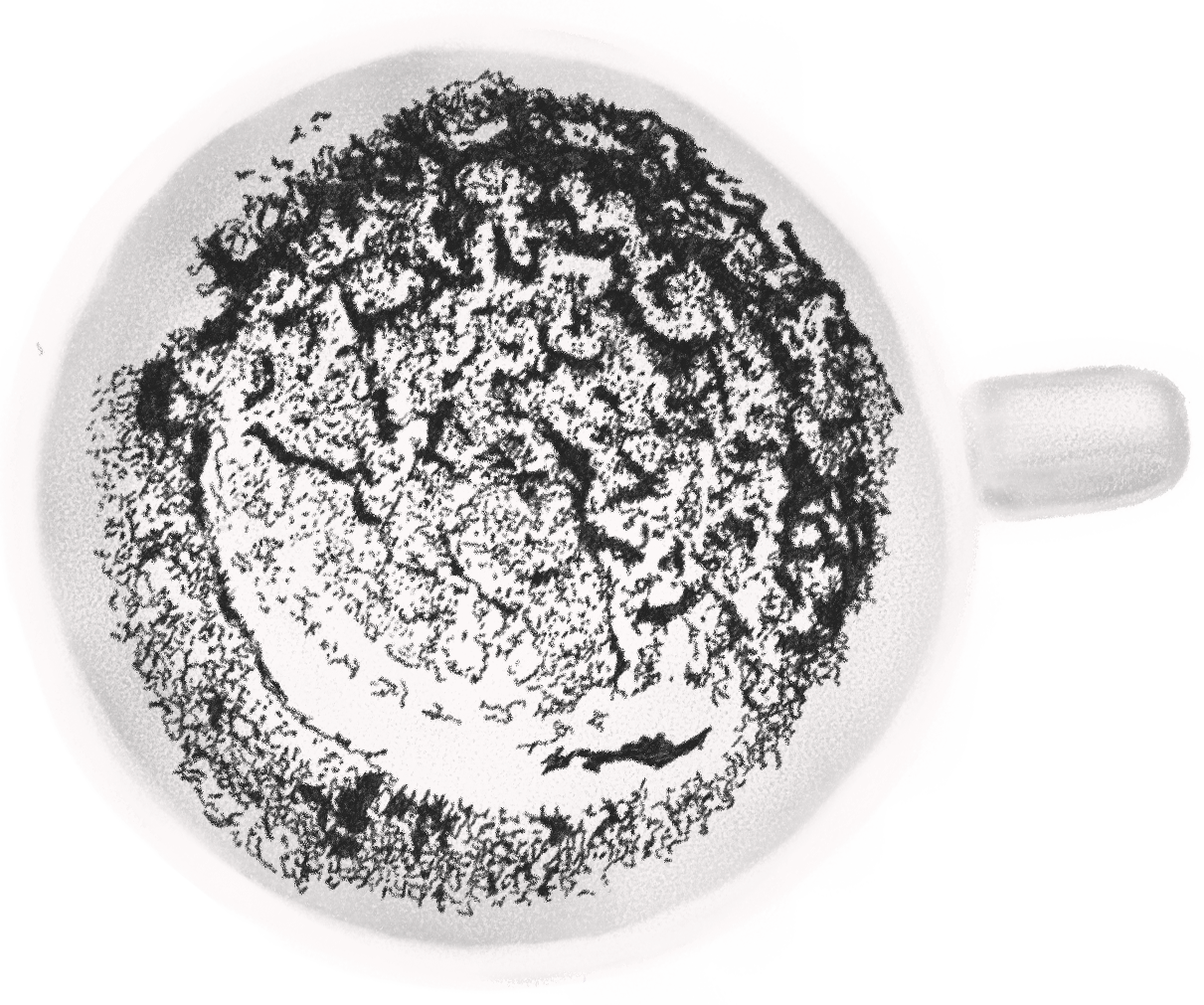



First, drink the coffee: how to turn coffee grounds reading into an enjoyable ritual

When reading coffee grounds, why not treat the process as a joyful ritual and pay attention to the taste of the coffee as well? Meowracle believes that finishing a cup only to get to the grounds misses the point. It is better to enjoy every stage of the process. This approach fills the ritual with a positive mood and may even turn it into a pleasant Sunday habit.
How to prepare the coffee
First, let’s decide how to brew the coffee. The classic choice for coffee grounds reading is a Turkish coffee pot, also known as a cezve. Once you have finished enjoying your drink, the grounds remain at the bottom of the cup, allowing you to begin the reading straight away.
Nevertheless, Meowracle takes a modern view. You can also adapt the ritual by using a drip coffee maker, moka pot, French press, pour-over, espresso machine, or even a pod or capsule machine — in other words, almost any brewing method that leaves you with coffee grounds. Instant coffee and three-in-one coffee will not work for this ritual. Unlike coffee brewed in a Turkish pot, these modern methods require a little extra effort: you will need to remove the grounds from the filter or container and place them in a separate cup.
Grind size and coffee flavour
The appropriate grind size depends on the brewing method you choose. A coarse grind consists of large particles, roughly the size of sea salt, and is suitable for a French press. A medium-coarse grind works well for pour-over coffee. A medium grind is a versatile option, particularly for drip coffee makers, while a medium-fine grind can be used for a moka pot. A fine grind is suitable for espresso machines, and an extra-fine, powder-like grind is best for Turkish coffee.

When choosing the flavour, start with your own preferences. For a mild and smooth cup, you might enjoy medium-roasted Arabica from Brazil, Honduras, or Colombia. For a stronger and more bitter flavour, try a darker roast or a blend containing Robusta from Vietnam, India, or Indonesia. For brighter acidity and fruitier notes, look for light-roasted Arabica from African countries such as Kenya, Ethiopia, or Rwanda. If you enjoy earthy or spicy flavours, coffee from Guatemala, Sumatra, or Java may appeal to you. You can also add a little nutmeg or cardamom directly to the coffee pot to make the aroma more distinctive.
The ritual
Once you have chosen the brewing method and the flavour you like, it is time to begin the ritual. Take your favourite cup — the wider it is, the easier it will be to examine the grounds. Prepare a saucer, as you will need it later. Open the window, let some fresh air into the kitchen, and brew the coffee in your preferred way.

Meowracle’s special tip: To make a weekend morning feel a little more adventurous, I would like to share the way my grandmother used to prepare coffee in hot sand, using a copper Turkish coffee pot in her old house. To try this method, use clean, completely dry sand and a heat-safe old pan or baking tray. Do not use damp sand collected directly from a beach. Place the pan on the stove and cover the bottom with a moderate layer of sand — enough to surround the lower part of the coffee pot without burying it completely. Warm the sand carefully over low to medium heat, and never leave it unattended. Meanwhile, add two or three teaspoons of coffee to the pot. Add sugar or spices if you like, then pour in cold water. Nestle the coffee pot into the warm sand so that the sand forms a neat border around its sides. When the foam rises towards the rim, remove the pot from the sand and allow the foam to settle. Repeat this twice more, but do not let the coffee boil over. When it is ready, pour it into the cup and wait for about a minute so that the grounds can settle at the bottom.
Drink your coffee with pleasure, but remember to keep a question or situation in mind. When you have finished, move the cup in three gentle circles and quickly turn it upside down onto the saucer. Wait a couple of minutes for the sediment to settle.
Now look carefully at the shapes that have appeared. Try to find familiar objects and symbols among them. The longer you look, the more you may notice. Rotate the cup and examine it from different angles. Think about the symbols you see. What might they mean to you? How could they relate to the question you asked? You can also consult Meowracle’s symbol guide, but it is usually better to explore your own associations first.
Try coffee grounds readingYou can repeat this ritual as often as you like, but Meowracle recommends not taking the result too seriously. Use it first and foremost as an opportunity to look at a question from a different angle — and, of course, to enjoy your morning coffee.