

Key as a Symbol: From Old Legends to Coffee Grounds
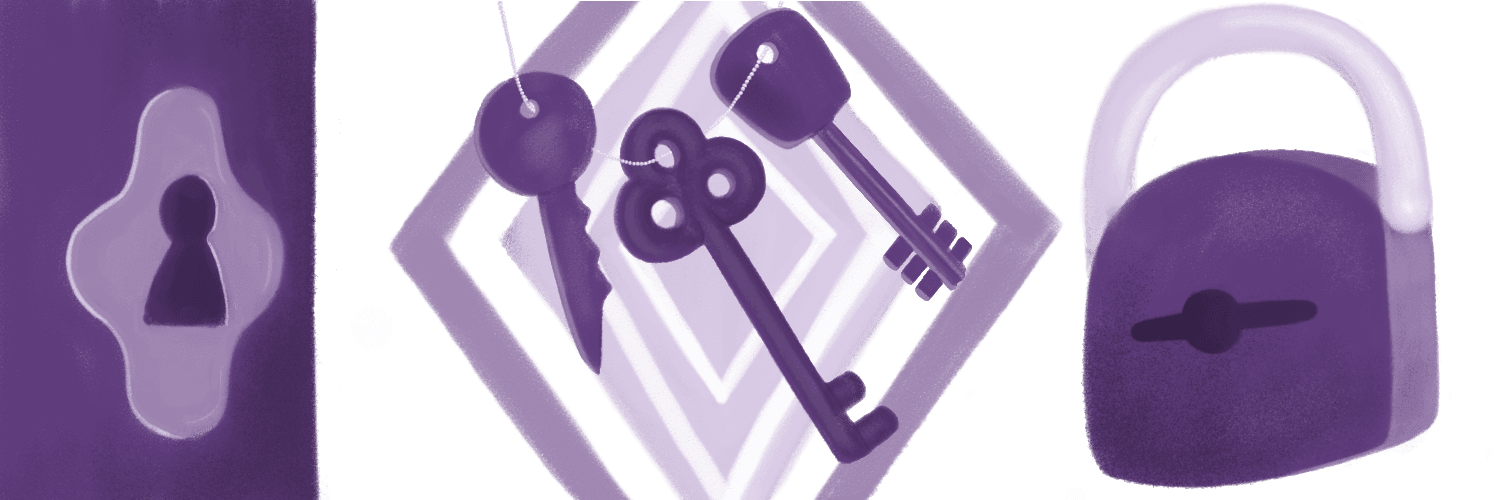
A key is one of those objects that can be recognised even from the simplest silhouette. A small ring, a long shaft, a few teeth - and in front of us is no longer just a piece of metal, but the promise of something hidden.
A key can open a door, a chest, a room, or a secret passage. But on its own, it tells us nothing. We see it and immediately begin to wonder what lies on the other side of the lock. That is why keys appear so often in legends, fairy tales, dreams, and symbolic images.
An Object Between Closed and Open
The meaning of a key comes from its function. It stands between a person and something they cannot yet access. A closed door says: you cannot go any farther. A key offers another possibility: there is a way forward, but first you need to find a way to open it.
That is why, in symbolic stories, a key can represent:
- access to something unknown;
- permission to enter;
- the solution to a mystery;
- a new opportunity;
- knowledge that was previously unavailable;
- responsibility for what has been opened.
At the same time, a key cannot promise that something good is waiting behind the door. It gives you the possibility of finding out, but it does not reveal in advance what will be discovered.
Keys in Legends and Fairy Tales
In old stories, keys often guarded the boundary between the ordinary world and forbidden spaces. A character might be given a ring of keys and allowed to open every door except one. Or, on the contrary, they might spend a long time searching for the only key to a room, tower, or chest. These stories are built not only around the object itself, but around a choice.
- Should you open the door if you were asked not to?
- Is it worth entering a place from which there may be no way back?
- What matters more - curiosity or caution?
- Is a person ready to learn what has been hidden from them?

Sometimes the key belongs to a guardian - someone who decides who may enter. Sometimes it is found by a character who does not yet know which lock it fits. And sometimes the door has already been discovered, but the key is lost, and the search becomes the main part of the story. In every case, the key creates anticipation: somewhere nearby, the story continues.
Not Only Freedom, but Responsibility
At first glance, a key seems like a symbol of freedom. It opens a way out, grants access, and removes a restriction. But it has another side as well. Whoever holds the key is also responsible for the space that can be opened.
A house key is connected not only with the possibility of entering, but also with the need to lock the door. A key to a safe or storage room implies trust. A ring of keys may represent not many opportunities, but many responsibilities.
That is why, in a symbolic image, it matters not only that a key is present, but also who is holding it. Did the character find it by accident? Receive it from someone? Hide it? Give it to someone else? Hold it tightly or prepare to let it go? The same object can tell a story about power, trust, curiosity, or fear of something new.
A Key Without a Lock and a Lock Without a Key
A key becomes especially interesting when there is no matching door nearby. It lies on a road, hangs from a branch, or rests in a cat's paws, but the viewer does not know what it opens. In such an image, the meaning has not yet been decided. The object seems to ask:
What could this give access to?
The opposite scene is possible too: a closed door stands in front of the character, but there is no key anywhere. Then the story is no longer about opening something, but about an obstacle, waiting, or searching for another way.
Even the position of the key changes its meaning. A key inside a lock suggests a moment of decision. A key at the bottom of a well may suggest an opportunity that is difficult to reach. A key left on a table can look like an invitation. And a key carried away by someone else may suggest the loss of access.
Why a Key Is Easy to See in a Random Pattern
A key has a recognisable shape, so people often notice it in clouds, shadows, stone patterns, or coffee grounds. Sometimes a round spot and a line extending from it are enough for the imagination to add the teeth.
But one person may see a key in the same mark, while another sees a lollipop, a tree, or a figure with a long arm. This happens because a random pattern does not contain a ready-made answer. It offers a few details, while the observer's mind adds the rest.
When a key appears in coffee grounds, it can be more interesting at first not to search for its meaning in a dictionary, but simply to look at the image itself.
- Is it large or almost invisible?
- Is it pointing upward or downward?
- Is there a door, a box, or another object nearby?
- Does the key seem found, lost, or hidden?
- Who might be able to use it?
The story often begins with exactly these details.
What a Key Means in Coffee-Ground Reading
In traditional interpretations, a key is usually associated with a solution, the opening of an opportunity, new knowledge, or a way out of difficulty. Sometimes it is understood as a sign of access to a place, a job, a relationship, or information.
However, a symbol rarely exists separately from the rest of the pattern. A key beside a road may suggest a new direction. Near a house, it may evoke moving, safety, or belonging. Beside a lock, it may suggest a problem for which a solution has already appeared. Several keys may point to a choice between different doors. At the same time, there is no need to treat such an image as a prediction. It can simply become the beginning of a small visual story:
- What currently feels closed?
- What kind of access would you like to gain?
- Do you already have a key that you are not using?
- And does every door you find really need to be opened?
The Key as an Invitation to Continue
A key almost never ends a story. It tells us that the continuation exists somewhere else: behind a door, inside a chest, in a locked room, or in a decision that has not yet been made.
Perhaps that is why the key remains such an expressive symbol. It speaks at once about a mystery and the possibility of revealing it. About an obstacle and a way to overcome it. About curiosity and responsibility for what may be found.
And in a coffee cup, it may appear from only a few accidental lines - and still make you wonder which invisible lock they might fit.
SEE WHAT IS HIDING IN THE CUP