
While the Coin Is in the Air: Why Even Small Decisions Can Feel So Difficult

Sometimes we can make an important decision surprisingly quickly, then spend ten minutes choosing a film or deciding what to order for dinner. From the outside, this may seem ridiculous: the consequences are hardly serious. Yet small decisions often catch us when we are already tired and have little energy left for comparing options.
Every possibility begins to feel like a separate investigation. Which one will be more enjoyable? Which choice will I regret? What if something even better appears a minute later? Gradually, an ordinary decision turns into a problem that must surely have one perfect answer.
When there are too many options
The ability to choose is usually seen as a form of freedom. But the more options we have, the more ways there seem to be to make a mistake. When a menu offers two desserts, it is usually easy to notice which one appeals to us more. When there are twenty, we begin comparing the price, size, ingredients, photographs and reviews. Even after making a decision, we may still wonder whether another dessert would have been better.
Sometimes the problem is not that we do not know what we want. Instead, we are trying to consider absolutely everything. We want to choose the option that is simultaneously the most enjoyable, sensible, affordable and correct. However, a small decision rarely deserves such a demanding examination.
The fear of regretting our choice
Sometimes it is not the choice itself that stops us, but the feeling we imagine having afterwards. We picture ourselves taking the wrong route, choosing the wrong film or ordering the wrong meal and thinking: “I could have chosen differently.” To protect ourselves from this future regret, we continue comparing options even when the differences between them are very small.
But a perfect choice does not always exist. Sometimes both options are good enough; they simply lead to slightly different evenings. Choosing one means letting go of the other, but that does not make the decision a mistake.
While the coin is in the air, we already know the answer
There is a familiar observation: while a tossed coin is still in the air, we suddenly realise which side we hope to see when it lands.
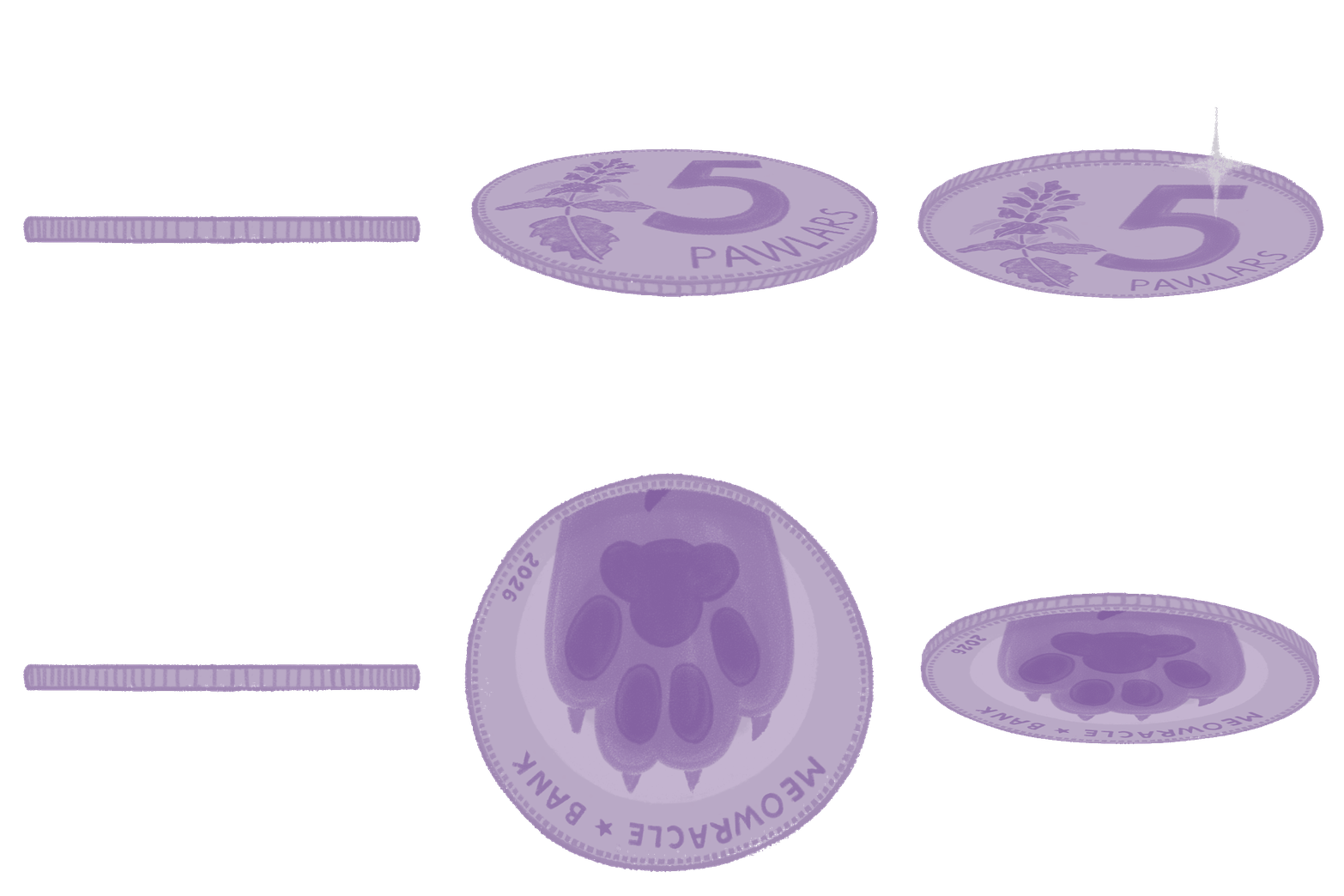
Of course, this does not happen every time. But a random choice can reveal not only a result, but also our reaction to it.
Imagine that heads means going for a walk and tails means staying at home. The coin lands on tails, and you immediately feel disappointed. The coin is not forcing you to stay indoors. It has simply helped you notice that you actually wanted to go out. The opposite can happen too. When the result brings a sense of relief, perhaps the decision had already been made somewhere inside you — it only needed a little permission from the outside. In this case, chance becomes not a judge, but a mirror.
When two options are not enough
A coin is useful when choosing between two possibilities, but sometimes we have several equally reasonable options: where to go, what to cook, which book to begin or how to spend the evening.
In that case, the choice wheel can make the first move. Add the options, spin it and pay attention not only to the pointer, but also to your own thoughts. Which section are you hoping it will land on? Which option do you secretly want to remove? Do you find yourself trying to persuade the wheel to stop somewhere in particular? Even before the result appears, these reactions may tell you more about your preferences than another list of advantages and disadvantages.
Not every decision should be left to chance
A coin and a choice wheel work best for everyday options with limited consequences. They can interrupt endless comparison and bring a little lightness back into the process. However, decisions involving health, safety, money, relationships or major life changes should not be left to a random result. In these situations, it is better to gather information, give yourself time and, when necessary, speak to someone you trust.
Meowracle does not suggest allowing a coin to decide your life for you. Sometimes it is enough to notice which result made you happy and which one you immediately wanted to argue with. Perhaps the answer had been nearby all along — it simply needed a few seconds while the coin was in the air.