



Who we become when we travel, and what we can bring home besides souvenirs
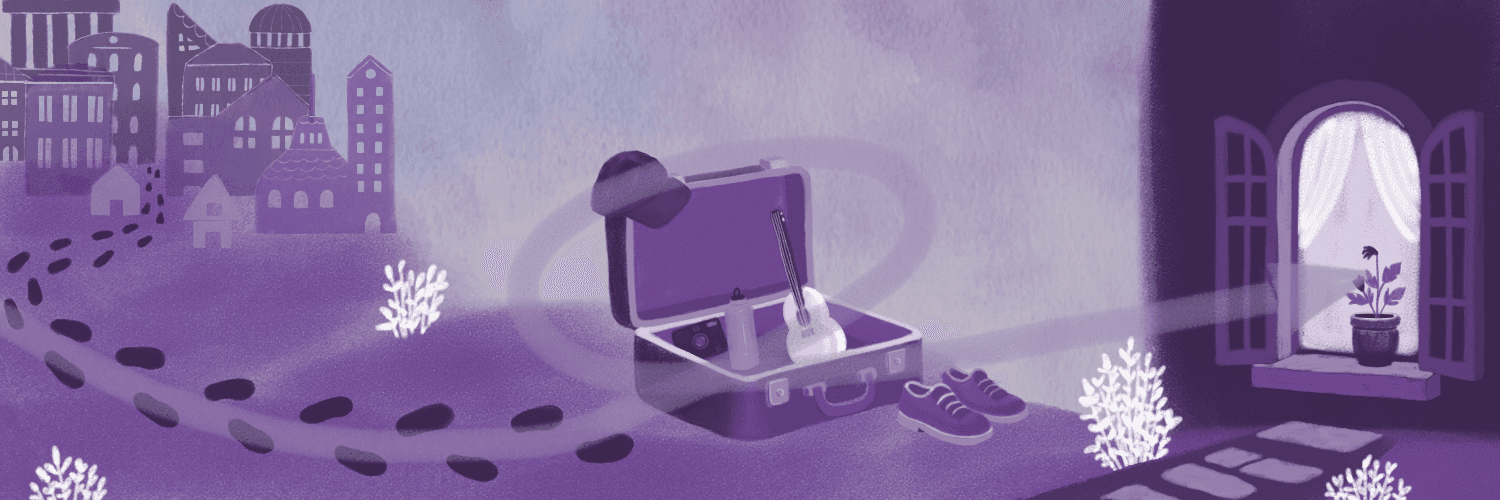
In everyday life, someone might put off taking a walk through a nearby neighbourhood for weeks, yet travel twenty kilometres in a single day while on a trip. At home, they dislike getting up before nine, but for an early train they calmly step outside before sunrise. They usually avoid talking to strangers, yet while travelling they ask for directions, discuss the menu with a waiter, and help someone figure out a ticket machine.
Sometimes it feels as though, along with our suitcase, we take a slightly different version of ourselves with us. This version wears clothes that seemed too bright at home. Walks into an unfamiliar café without spending ages reading reviews. Agrees to leave the planned route, try an unusual dish, or spend an evening without the usual schedule. Even small inconveniences - a missed stop, rain, a closed museum - are seen not only as disruptions, but as part of the journey.
Who is this person? A temporary role we play away from home, or a real part of us that simply does not have enough room in everyday life?
In a new place, there is no familiar script
At home, almost every day already has a shape. We know which street we take to the shop, where we sit on the bus, what we usually order, and how we spend the evening after work. It is convenient: we do not have to decide all over again how to live this particular Tuesday.
But along with our habits, certain roles gradually become fixed as well.
- I don’t like getting up early.
- I’m bad with directions.
- I don’t know how to talk to strangers.
- I’m not the kind of person who acts spontaneously.
When we travel, these definitions briefly lose some of their power. A new city knows nothing about us yet. There are no familiar places where we always behave the same way, and no people expecting our usual reactions. We have to look more carefully, ask questions, and make small decisions that simply do not come up at home. Not because we suddenly became braver or more sociable - sometimes it is not the personality that changes, but the setting.
Our actions have different reasons when we travel
At home, the idea of getting up at six in the morning just to go for a walk may seem pointless. On a trip, there is a reason: empty streets, an early train, sunrise by the sea, or a gallery you want to reach before the queue forms.
Walking fifteen kilometres also feels easier when you want to explore the streets of an unfamiliar city. Talking to a stranger becomes necessary because otherwise you may not find the bus stop. Unusual clothes feel more appropriate because they were packed specifically for the trip. Things that would require an internal justification in everyday life are already justified by the circumstances while travelling.
We do not simply “decide to become different.” New behaviour has a specific reason behind it, which is why our holiday version of ourselves often feels lighter and freer. We do not have to become forever the kind of person who walks at sunrise and easily starts conversations with strangers. It works today because we are away from home.
The unfamiliar turns mistakes into stories
At home, getting on the wrong bus is an annoying waste of time. While travelling, the same mistake can turn into a story about a neighbourhood you discovered by accident. Of course, not every inconvenience becomes an adventure. Sometimes getting lost is simply unpleasant or even dangerous, and a closed station can seriously disrupt your plans. But when travelling, we already expect that not everything will be familiar or predictable.
That is why some mistakes are easier to experience without feeling that they say something about our abilities. We pronounced the name of a dish incorrectly - because the language is new. We could not find the right entrance - because it is the first time we have seen a building with this kind of architecture. We chose a place that was not especially interesting - because we trusted the guidebook.
In everyday life, we often expect ourselves to be competent even in small things, while travelling it is much easier to allow ourselves to be beginners. Perhaps this is exactly what makes our holiday selves more curious: we know we are not supposed to understand an unfamiliar place completely.
Temporarily, it is not only the place that changes, but our sense of time
Everyday hours are divided between work, household tasks, commuting, rest, and sleep. Even a free evening can feel like a short interval in which we need to recover before the next day.
While travelling, time becomes more noticeable: there are two hours left before the train, the museum is open until five, today is the last day by the sea, the restaurant closes for a break from 2 to 6 p.m., and there is only one morning we will get to see in this city.
This can create a sense of hurry, but it can also help us stay present in the moment. An ordinary cup of coffee becomes a separate event not because the coffee itself is special, but because we are not drinking it while working at the same time. We look around more carefully and notice details more often: a pattern on the tiles, a cat on a windowsill, the sound of an unfamiliar pedestrian crossing signal. These things exist at home too, but they rarely earn a separate place in our memory.
Why this version of ourselves is difficult to keep
After returning home, someone may sincerely decide: now I will walk more, try new things more often, and stop postponing interesting plans - only to find themselves back in the same routine a week later. This does not necessarily mean that the freedom they felt while travelling was unreal. The old conditions have simply returned: familiar routes, responsibilities, tiredness, and decisions that have long since become automatic.
Besides, it is impossible to live as though every day were a journey. Constant novelty is exhausting. We cannot treat breakfast as a cultural discovery every day or turn a trip to the grocery store into an expedition. There is no need to try to transport our holiday self home intact; perhaps that version exists precisely because of a temporary step away from ordinary life. But some parts of it can still be kept.
Not a new personality, but one small habit
After a trip, it is easy to give ourselves an overly ambitious task: from now on, I will live differently. But perhaps it is more interesting to choose one specific trait. Not “become more spontaneous,” but once a month go somewhere unfamiliar without a detailed plan. Not “be more sociable,” but sometimes be the first to ask a stranger a simple question. Not “live an active life,” but take one extra walk even if it does not lead anywhere important.
We can remember not only what we did during the trip, but also why it was possible. Did we get up earlier because something interesting was waiting ahead? Did we walk more because the journey itself was part of the day? Was it easier to say yes to something new because we did not demand a guarantee of a perfect result in advance?
Sometimes what we need to bring home is not the action itself, but the condition that supported it. Not force ourselves to wake up at sunrise every day, but occasionally plan a reason that genuinely makes us want to get up.
What remains after we return
We bring home tickets, photographs, stones, postcards, and things that do not always have much use once we are back. But along with them comes the memory of the person we were there. The person who figured out a complicated route alone, who was not afraid to ask, who dared to try paragliding, who wore a bright shirt, walked a lot, made mistakes, and still carried on with the day.
Perhaps our holiday self is not a separate personality or a mask. It is one of our possibilities, one that becomes more visible under the right circumstances. We do not have to preserve it completely; sometimes it is enough to remember that this person already exists.
What trait from your holiday self would you like to bring home?